

KEY TAKEAWAYS
A near miss on a slot machine is a spin that stops just short of a winning result, such as two jackpot symbols on the payline and the third landing one position away. It looks close, but it is a loss: the game pays nothing, exactly as it would for any other losing spin. It also tells a player nothing about what the next spin will do.
The reason this matters is that near misses feel like progress. They can produce a rush of excitement and a sense that a win is about to come, and research suggests this feeling can encourage people to keep playing. This guide explains how a near miss is decided, what the math looks like in a hypothetical game, what the research says, and how to keep the experience in perspective. It describes the mechanic and does not suggest any way of beating a game.
What a Near Miss Is
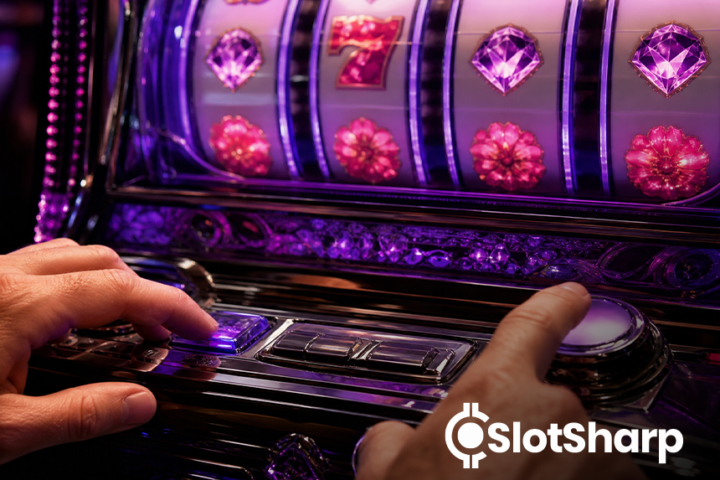
A near miss is a losing spin whose layout resembles a win. The classic case has two matching top symbols on a payline and the third symbol just above or below it, but the term also covers a bonus symbol missing by one reel. Nothing about it is a partial payout: the paytable pays for complete combinations, so a result that falls short pays zero.
Near misses are common because the outcomes that look close are far more numerous than the outcomes that win. If a reel has many positions and only one of them completes the pattern, then many of the other positions sit next to it on the strip. A spin that lands beside the winning stop therefore happens often, which is a feature of the arithmetic and not a signal.
It is easy to treat a near miss as information, as if the game were warming up. It is better understood as one more losing result, equal in value to a spin that showed nothing special. The independence of spins behind this is explained in why slot machines are never due to hit.
How a Spin Is Decided, and Why a Near Miss Means Nothing
The random number generator decides first
In a modern slot, a random number generator selects the result at the moment a spin is played, and the reels then display it. The animation shows the result and does not decide it, which is why stopping the reels early cannot change the outcome. The mechanics are described in plain terms in how slot machines work.
Each spin is independent
Because the generator is not influenced by earlier results, a near miss neither raises nor lowers the chance of a win on the next spin. The odds on spin 101 are the same whether spin 100 was a near miss, a big win or a blank.
Why the display can look close
A game can show symbols in many positions, and the symbols that appear next to a winning stop are part of the reel strip like any other. A near miss shown on screen is a display of a losing result and never a promise about a following one.
Worked Example: A Hypothetical Near Miss
Suppose, as a hypothetical, that a three-reel game has 64 equally likely stops on each reel, and only one stop on each reel holds the jackpot symbol. All three must appear on the payline to win. These numbers are invented to teach the arithmetic and do not describe any real game.
The chance of the top prize is (1 ÷ 64)3 = 1 in 262,144. The chance that the first two reels show the jackpot symbol and the third does not is (1 ÷ 64)2 × (63 ÷ 64) = 63 in 262,144, or about 1 in 4,161. That near miss is 63 times as common as the win itself, so seeing one is ordinary.
Over 1,000 spins, the average number of these near misses is 1,000 × 63 ÷ 262,144 = about 0.24, and the average number of jackpots is 1,000 ÷ 262,144 = about 0.004. Because every spin is independent, a near miss on one spin leaves the odds on the next unchanged. And at a hypothetical $1.00 bet and 96% RTP, those 1,000 spins wager $1,000 and cost about $40 on average, whatever the near-miss count.
What the Research Says About Near Misses
Studies of slot play describe why near misses feel different from other losses. A 2013 paper in the Journal of Gambling Studies measured skin conductance (a sign of physiological arousal) and the pause before the next spin in 122 players using a slot simulator. It found that near misses with jackpot symbols on the first two reels produced larger arousal responses than regular losses, and shorter pauses before the next spin than wins.
The authors concluded that these outcomes are highly frustrating and may stimulate parts of the reward system in ways that promote continued gambling. The finding is about how players react, not about the odds, and it is one reason the feeling of “almost won” should not be trusted as evidence of anything about the game.
Common Mistakes and Myths About Near Misses
“A near miss means a win is close” is the main myth. Close on the screen is not close in probability, because the result was already fixed by the random number generator when the spin started.
“The machine is warming up” assumes a memory that does not exist. Each spin starts fresh with the same odds.
“Raise the bet because a win is near” is a costly mistake. A larger bet changes the size of the payout and the speed of spending, not the odds, as shown in whether bet size changes slot odds.
“Near misses are the game cheating” is also unreliable. The arithmetic above shows they occur naturally when winning outcomes are rare.
Practical Tips for Keeping Near Misses in Perspective
When a near miss appears, treat it as an ordinary loss. Nothing has been won, nothing has been learned about the next spin, and the expected cost of play has not changed. At a hypothetical 96% RTP, every $100 wagered costs about $4 on average over the long run, with or without close calls.
Decide on a budget and a time limit before playing, and treat the budget as the cost of entertainment. A near miss is not a reason to continue past either limit, to raise the bet or to chase a loss. If the urge to keep going after a close call feels strong, stepping away is a sensible response, and support services exist for anyone who finds gambling hard to control.
Check the game’s help screen for its rules, and remember that RTP and features can vary by game, casino and jurisdiction.
Where to Go Next
The near miss is one example of a wider rule: results on a slot are independent and cannot be read. The article on whether slot machines are ever due to hit takes the same idea further, and the one on how a slot machine works explains the generator behind it.
Reading both makes it easier to separate how a result feels from what it means, which is the most useful habit a player can build.